


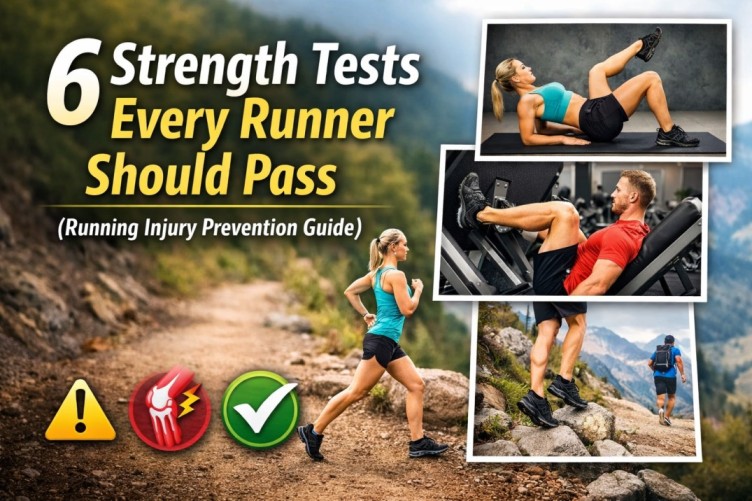
6 Strength Tests Every Runner Should Pass (Running Injury Prevention Guide) 🏃♂️🥾
If you’re a runner, trail runner, or hiker, your body must be strong enough to handle the repeated load of running. Every step places significant force through your legs. During steady running, this force is typically around 2–3 times your body weight, but when running faster, sprinting, or descending hills, ground reaction forces can exceed 4–5 times body weight.
Over thousands of steps during a run or hike, your muscles must repeatedly absorb and control these forces. Without adequate strength, that load can shift to tendons and joints, which is why many runners experience injuries such as runner’s knee, Achilles tendon pain, plantar fasciitis, and hip issues.
This is where strength tests for runners become valuable. Simple single-leg strength tests can help identify weaknesses in the glutes, hamstrings, calves and core, all of which play a key role in running efficiency, injury prevention and load tolerance.
Below are six simple strength tests runners and hikers can use to assess how well their body handles load when running or moving through the hills.
1. Single-Leg Glute Bridge
What it tests
The single-leg glute bridge assesses glute strength and endurance, which are essential for hip stability while running and hiking.
Weak glutes can contribute to poor running mechanics and increased stress on the knees and lower back.
How to perform
-
Lie on your back with one knee bent and one leg straight
-
Push through the heel of the bent leg (keeping the foot flat)
-
Lift your hips while keeping the pelvis level
-
Lower slowly and repeat
Strength benchmark for runners
✅ 20–30 repetitions on each side
If your hamstrings cramp or fatigue early, it may indicate glute weakness common in runners.
2. Single-Leg Sit-to-Stand (Single-Leg Squat to Chair)
What it tests
This movement assesses single-leg strength, hip stability, and knee control, which are important for running and hiking downhill or on uneven terrain.
How to perform
-
Sit on a chair or bench
-
Extend one leg forward
-
Stand up using the working leg only
-
Lower yourself back down with control
Strength benchmark
✅ 10 controlled repetitions
Watch for the knee collapsing inward or loss of balance, as these can indicate reduced strength and control when the body is under load.
3. Single-Leg Hamstring Bridge (Feet Elevated)
What it tests
This exercise assesses hamstring strength and posterior chain endurance.
The hamstrings play an important role in propelling the body forward and controlling the leg during running, particularly when descending hills.
How to perform
-
Lie on your back with one heel placed on a box or bench
-
Keep the opposite leg straight
-
Lift your hips up while maintaining control
-
Lower slowly
Strength benchmark
✅ 20–30 repetitions each side
If you struggle to maintain hip height, it may suggest reduced hamstring endurance.
4. Side Plank with Leg Raise
What it tests
This movement assesses lateral core stability and hip control, particularly the glute medius.
Strong lateral hip muscles help prevent excessive hip drop during running, which can reduce strain on the knees and IT band.
How to perform
-
Hold a side plank position
-
Slowly raise the top leg
-
Lower with control
Strength benchmark
✅ 5 controlled repetitions each side
Focus on maintaining a stable pelvis throughout the movement.
5. Single-Leg Calf Raise
What it tests
The single-leg calf raise is one of the most important strength and endurance tests for runners, because the calves and Achilles tendon absorb large forces during running — particularly when running uphill, downhill, or on technical trails.
Strong calves help improve push-off power, shock absorption, and Achilles tendon resilience, which is essential for both runners and hikers.
How to perform
-
Stand on one foot
-
Raise your heel as high as possible
-
Lower slowly with control
-
Continue until you reach fatigue or the target number
Strength benchmark
✅ 30 repetitions per leg
For ultra runners or long-distance hikers
✅ 40+ repetitions
Calf endurance can also vary depending on age, and there are useful benchmarks showing how many single-leg calf raises people should typically achieve at different ages.
👉 See the reference guide for single-leg calf raise benchmarks by age here (insert link).
If you struggle to reach these numbers, it may indicate reduced calf endurance or Achilles tendon capacity, which can increase the risk of Achilles tendinopathy or calf strains.
6. Single-Leg Press Strength Test
What it tests
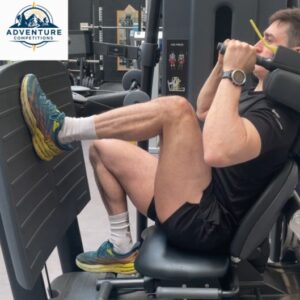
This test assesses maximum single-leg strength.
Running is essentially a series of single-leg loading cycles, so adequate unilateral strength is important for tolerating the demands of running, trail running and hill running.
How to perform
-
Use a leg press machine in the gym
-
Perform the exercise using one leg (ideally reaching around 90° knee bend)
-
Determine your one-rep maximum (1RM)
Strength benchmark
✅ Single-leg press your body weight for one repetition
This indicates a good baseline level of strength for handling running loads.
A commonly referenced gold standard for lower-limb strength is the ability to single-leg press around 1.5× body weight, which demonstrates excellent strength capacity for runners and hikers.
Why Strength Matters for Runners and Hikers 💪
Running and hiking require your body to absorb and produce force thousands of times during a session.
If the muscles responsible for controlling that load aren’t strong enough, the stress shifts to tendons, ligaments and joints, increasing the likelihood of injury.
Improving strength in the glutes, hamstrings, calves and core can help runners:
✅ Improve running efficiency
✅ Reduce injury risk
✅ Increase durability for trail running
✅ Improve hill running performance
✅ Stay stronger during long hikes or ultra-distance events
If you struggle with several of the tests above, adding strength training for runners to your routine can significantly improve both performance and resilience.
Win Trail Running Gear, Garmin Watches & Outdoor Adventure Prizes 🎁
If you enjoy running, hiking and exploring the outdoors, you might also be interested in our running gear competitions and outdoor prize draws.
We regularly run competitions where outdoor enthusiasts can win premium trail running gear and outdoor equipment, including:
✅ Garmin running watches such as the Garmin Fenix 8
✅ Trail running shoes
✅ Sportsshoes.com vouchers
✅ Hydration vests and running backpacks
✅ Trail running poles
✅ Running sunglasses
✅ Headtorches for night running
✅ Recovery tools such as Theragun massage guns
✅ Endurance nutrition like energy gels
Many runners searching online for running gear competitions in the UK, Garmin watch giveaways, or trail running gear bundles discover our competitions when looking for equipment to support their training.
Whether you’re preparing for your first trail race, training for an ultra marathon, or planning your next hiking adventure, our competitions give you the opportunity to win high-quality running and outdoor gear.
👉 Explore the latest running gear competitions and outdoor adventure prize draws and see what gear you could win.
Frequently Asked Questions About Running Strength
How strong should runners be?
Runners should have sufficient single-leg strength and endurance to tolerate the repetitive load of running.
A good minimum strength standard for runners includes:
✅ Single-leg glute bridge: 20–30 reps per side
✅ Single-leg sit-to-stand: 10 controlled reps
✅ Single-leg hamstring bridge: 20–30 reps per side
✅ Side plank with leg raise: 5 controlled reps per side
✅ Single-leg calf raises: 30 reps per leg (40+ for ultra runners)
For maximum strength, runners should ideally be able to single-leg press their body weight for one repetition on a leg press machine.
A commonly referenced gold standard is the ability to single-leg press 1.5× body weight, demonstrating excellent strength capacity for running and hill running.
Why is strength important for runners?
Running places significant load on the body, with each step generating 2–3 times body weight through the legs, and during faster running or sprinting ground reaction forces can exceed 4–5 times body weight.
Strength training helps runners develop the muscular capacity to absorb and control these forces, improving efficiency and reducing injury risk.
How many single-leg calf raises should runners be able to do?
Most runners should aim to perform at least 30 single-leg calf raises per leg with good control.
For ultra runners and long-distance hikers, achieving 40 or more repetitions per leg can indicate greater calf endurance and Achilles tendon capacity.
Can strength training help prevent running injuries?
Yes. Strength training for runners helps improve load tolerance, muscular balance and movement control, reducing the risk of injuries such as:
-
Achilles tendinopathy
-
Runner’s knee
-
IT band syndrome
-
Plantar fasciitis
What strength tests should runners pass before increasing mileage?
Before increasing mileage or preparing for longer races, runners should ideally pass several single-leg strength tests, including single-leg glute bridges, calf raises, single-leg squats and single-leg press strength tests.
👉 Read the blog above for full details on each test and the recommended strength benchmarks for runners.